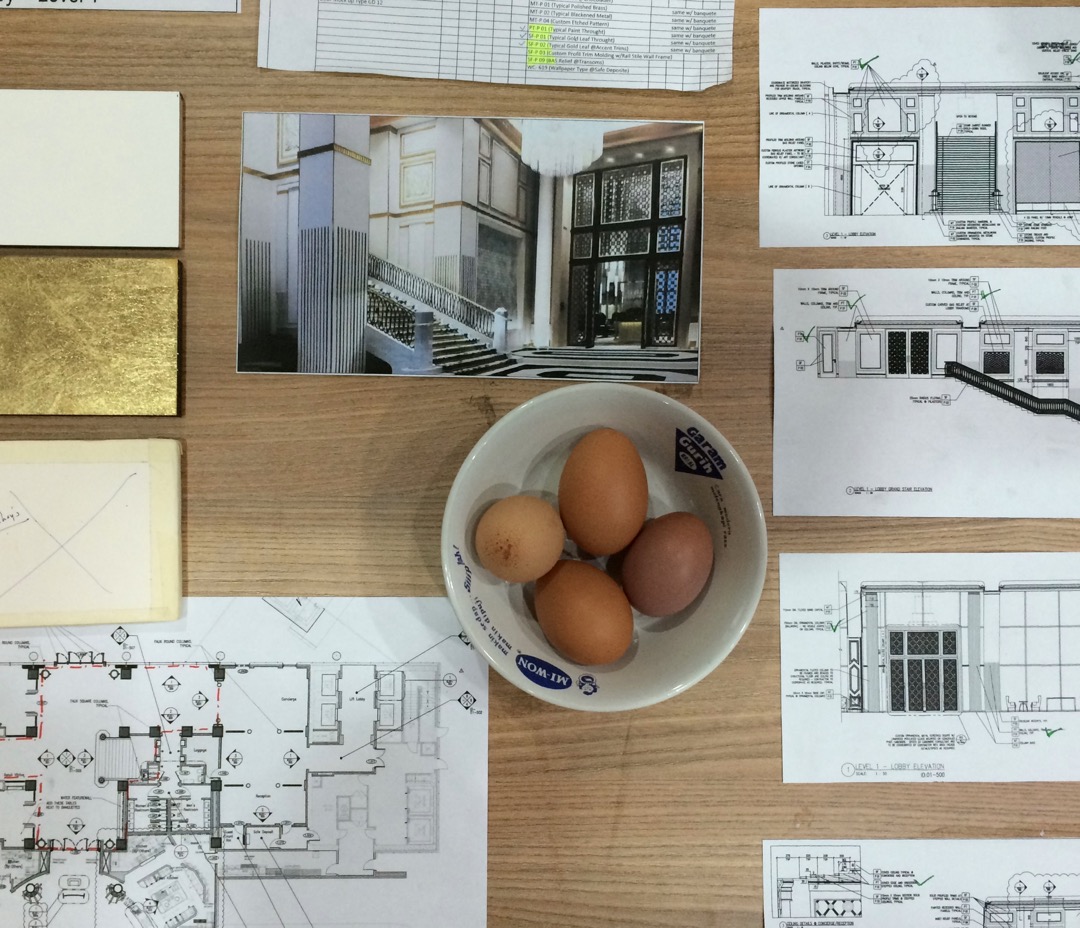
In today’s hospitality landscape, exceptional design is no longer enough. True success lies in the seamless integration of design, operations, technology, and human experience. Drawing on global experience across luxury developments, this perspective explores how a holistic approach, grounded in High Tech, High Tea, and High Touch, shapes meaningful guest journeys and enduring asset value.
Story by Loek Van Emmerik
Hospitality design today demands far more than aesthetic excellence. It is no longer about creating beautiful spaces alone but about orchestrating an experience that feels effortless, intuitive, and deeply human. The most successful developments are not conceived in isolation. They emerge from a holistic and integrated approach, where every decision, from concept to operation, is aligned with a singular vision of the guest experience.
With extensive experience across luxury and upper upscale hotel and resort developments, my work has been shaped by a deep understanding of the full lifecycle of hospitality assets. Every phase, from early concept design to operational delivery, contributes to the ultimate outcome: how a guest feels, remembers, and returns. At the same time, these decisions define long term asset value, ensuring that design is not only beautiful but also sustainable in performance.
My journey across Europe, the United States, the Caribbean, the Middle East, and Asia has informed a philosophy I describe as the three High Ts:
High Tech
Technology should work quietly in the background yet be ever present in enhancing comfort, efficiency, and operational excellence. The guest may not always see it, but they will certainly feel it.
High Tea
Beyond its literal meaning, High Tea represents elegance, comfort, and a sense of occasion. Luxury is not defined solely by materials or visual appeal, but by thoughtful design that anticipates needs before they arise.
High Touch
At the heart of hospitality lies human connection. From the first digital interaction to the final farewell, memorable service engages the senses and creates emotional resonance.
Designing with the Guest in Mind
The principle may sound simple, but execution is anything but. Every successful project begins with clarity. Who is the guest? What experience are we designing? Where does this story take place?
Context is everything. In many Asian markets, multigenerational travel is not an exception, but the norm. This reality must be embedded into every layer of design, from master planning to the smallest spatial detail.
During the development of a luxury resort in Marrakech, we introduced a young adult club concept, addressing a demographic that is often overlooked. While children’s facilities are well considered, teenagers are frequently left without meaningful spaces of their own. Yet today’s travellers are more discerning than ever, and their expectations more layered. A truly holistic approach means designing for everyone, across generations and across market segments.
What Defines Luxury?
Luxury is often described, but rarely defined. Its meaning evolves, yet certain qualities remain constant.
Space, for one, is fundamental. Generosity of space creates a sense of calm, privacy, and comfort. But true luxury extends beyond what is visible. It is found in moments of intuition.
A guest should never need to ask. The finest service anticipates rather than reacts.
I remember arriving at a resort in Austria with my daughter. We were greeted by name as we entered the lobby, and again the following morning at breakfast. It was a simple gesture, yet profoundly personal. Years later, she still asks when we will return.
At another time, arriving unannounced at the renowned George V in Paris, I was greeted by name at the entrance. Curious, I later asked how this was possible. The porter explained that he had discreetly checked my luggage tag before approaching me. Subtle, intelligent, and entirely focused on the guest. This is the essence of luxury.
Hospitality, at its core, is about creating moments that stay.
Bridging Design and Execution
Design begins not with drawing, but with empathy. It requires thinking, quite simply, as a guest.
I often ask designers when they last stayed in a luxury hotel. Without recent, first hand experience, it becomes difficult to design with authenticity. Creativity must be grounded in reality.
Yet even the strongest concept can falter if execution falls short. One of the most persistent challenges in hospitality development is the gap between design intent and on site delivery. A compelling vision means little without the craftsmanship to realise it.
A holistic approach must therefore extend beyond design. It must carry through construction, detailing, and final delivery. Only then can outcomes be consistent and predictable.
Clarity and communication are essential from the outset. Every consultant, every specialist, must work towards a shared vision. Alignment is not optional. It is fundamental.
It is often said that the devil is in the detail. I prefer to think that quality lives there. Materials, finishes, and execution define the difference between intention and reality.
Aesthetics and Functionality
Hospitality design is often celebrated for its visual impact. Yet in practice, functionality is just as critical.
Too frequently, usability is overlooked during early design stages. Even the most respected studios can lose sight of how spaces are actually experienced.
One of the simplest yet most revealing tools is the mock up room. Walking into a space with a suitcase or navigating it with a luggage trolley immediately exposes flaws that drawings cannot. Even in the most luxurious properties, these details matter.
Beauty alone is not enough. Function must support it, seamlessly and invisibly.
Design Thinking and Accountability
A powerful approach in hospitality development is inversion thinking. Rather than asking what will succeed, we ask what might fail, and address it early.
This requires both discipline and passion.
Leadership in design carries responsibility beyond concept approval. It extends to the moment the first guest walks through the door.
I recall a project where an owner experienced discomfort while dining at another property within the same brand. The issue was not design, but execution. From that moment, it reinforced the importance of staying involved beyond documentation. Factory visits, prototype reviews, and quality checks are not optional. They are essential in safeguarding the integrity of the design.
The Power of Collaboration
No hospitality project succeeds in isolation. It is the result of collaboration across disciplines.
The relationship between interior design and lighting is a clear example. When aligned, they create atmosphere. When disconnected, they expose flaws instantly.
In hospitality, lighting should not announce itself. It should quietly elevate the experience.
Operational design is equally critical. Transitions between front of house and back of house must be seamless. Elements such as vestibules, lighting shifts, and visual boundaries may appear subtle, yet they shape how a space is perceived.
Designing for the Future
Hospitality is constantly evolving. Designing for today is no longer sufficient.
The challenge is to anticipate what guests will expect in the years ahead. I often encourage designers to think ten to fifteen years forward. Every decision made today must remain relevant tomorrow.
Technology will continue to transform the industry. Yet its role is not to replace human interaction, but to enhance it. When used thoughtfully, it frees staff from administrative tasks and allows them to focus on what matters most, genuine engagement.
Traditional reception desks, for instance, often create distance. With the right technological integration, these can be reimagined, enabling staff to act as hosts rather than gatekeepers.
Creating Memorable Experiences
Ultimately, a holistic approach serves one purpose above all: the guest.
Hospitality is about recognition, emotion, and memory. It is about creating experiences that linger, that are shared, and that draw people back.
Design must therefore move beyond form and function. It must create a sense of belonging, of comfort, of individuality.
Because in the end, what every guest seeks is simple. To feel seen, valued, and remembered.